
April 27, 2018
Ygrene Closes Industry Record
$340.5 Million ABS Transaction
Largest securitization in PACE history; first-ever PACE transaction rated by S&P and rated AA+ by Kroll
PETALUMA, Calif., April 27, 2018 /PRNewswire/—Ygrene, a national leader in energy efficiency and resiliency financing, today closed on a $340.5 million note rated AAA/AA+/AA by Morningstar/Kroll/S&P. The deal marks the largest securitization in property assessed clean energy (PACE) history and the first to receive a rating from S&P, signaling the continued strength of one of the fastest growing asset classes in the country.
"We are happy to see such strong investor support as
Ygrene continues its mission of providing quality PACE
financing to help build communities and improve the
environment," said Tim Condon, CFO at Ygrene. "With
the continued confidence of investors and credit rating agencies, Ygrene provides a unique financing option for property owners to conserve energy and water, improve resiliency against natural disasters and source clean energy systems. This record securitization enables the expansion of Ygrene into more cities and counties nationwide."
In addition to being the first-ever PACE transaction rated by S&P, this is the first PACE transaction to receive an AA+ rating by Kroll. It also received an E1 Score (the highest achievable score) from S&P Green Evaluation, another first for both Ygrene and the PACE industry.
The transaction also represents the seventh securitization—over $1 billion to date—sponsored by Ygrene since 2015. This transaction includes approximately $14 million in commercial originations and the nearly even split of underlying assets between California (55%) and Florida (45%) assessments, underscoring the quality and diversity of Ygrene's assets. The first payment of notes will be on October 15th, 2018.
About Ygrene
Ygrene is a national leader in residential and commercial energy efficiency and resiliency project financing. Founded in 2010, Ygrene's award-winning, privately funded Property Assessed Clean Energy (PACE) program is revolutionizing the home improvement industry, making it easier for property owners to invest in their futures and a healthier environment. Ygrene is delivering greater choice for home and business owners by providing accessible and affordable financing for energy efficiency, renewables, water conservation, storm protection and seismic upgrades. Recognized as one of the fastest growing asset classes in the country, PACE has proven to be a successful tool for supporting public policy initiatives, all without the use of public tax dollars or credits. To date, Ygrene has provided over $1 billion of private capital to more than 69,000 property owners in over 500 communities, creating thousands of jobs and investing millions into local economies across the U.S. While PACE programs are enabled by state legislation and must be approved by local governments, Ygrene is not a government program. Learn more at ygrene.com.
Sacramento Business Journal
by Rocco Fabiano
April 20, 2018
Another Voice: A Model for Energy Efficiency in Sacramento
Five years ago, the city of Sacramento set out to attract $100 million to invest in energy-saving improvements for commercial and residential properties—with no use of public dollars. The vehicle chosen to realize this goal was PACE (Property Assessed Clean Energy), the nation’s first comprehensive, privately-funded energy efficiency and resiliency financing program.
The city, along with Ygrene, a leading national PACE financing provider, introduced the program in 2013 with the support of Rep. Doris Matsui and then-Mayor Kevin Johnson. The mission was simple: make it easier for property owners to make smart investments that reduce their energy and water usage, cut pollution and save on utility bills. The creation of thousands of local jobs was an added benefit.
Thanks to local leadership, area residents gained
greater access to long-term, low-rate financing options
for upgrades such as solar panels and seismic retrofits.
This innovative program was available to homeowners
and commercial property owners alike, allowing both
to pay for improvements through their tax bills.
Because the city took early action on PACE, many of the businesses and organizations that are transforming Sacramento’s economy and civic life today have benefitted—from schools and churches to hotels and locally-owned retail and office buildings.
The progress Sacramento’s program made it its first year demonstrated the value of the PACE model. But as with any business story, PACE’s growth was not without challenges. Early on, the industry recognized the need to ensure customers fully understood the program—both how contractors were evaluated and how the financing mechanism worked. Transparency was an industry-wide issue that needed attention, and Ygrene worked quickly to address it.
We created the most extensive PACE consumer protection measures in the country and established Ygrene as a leader in responsible, consumer-focused home improvement finance. Our pro-consumer practices, in part, became the basis for the consumer protection PACE legislation ultimately signed into law by Gov. Jerry Brown last year.
Today, Sacramento's PACE program is a testament to what can be achieved through public-private partnership. In the program's first five years in the state's capital, nearly $60 million in projects were funded with 100 percent private capital, upwards of 700 local jobs were created and the city's CO2 emissions were reduced by nearly 55,000 metric tons—the equivalent of taking more than 11,000 cars off the road for a year. Ygrene will receive a proclamation for helping the city reach these milestones by Mayor Darrell Steinberg at an upcoming Sacramento City Council meeting.
Cities throughout California have taken notice. The program that started in Sacramento is now available to nearly 75 percent of California's population—30 million residents. Statewide, we've created more than 12,000 jobs and have helped save 3.4 billion gallons of water. Due in part to Sacramento's success, PACE is now available in nearly 600 cities and counties across the U.S.
Ygrene has invested more than $1 billion to complete nearly 46,000 projects for property owners nationwide. With this kind of dedicated growth, and the collective evolution of the industry, we are knocking down the barriers to energy efficiency financing and making it possible for property owners to consider the idea of renewable energy as a lifestyle, rather than an unobtainable luxury.
What began in the "City of Trees" as a new idea five years ago, has helped turn the state's capital into a national example of how a community can help individuals and businesses creatively finance affordable, energy-saving improvements. Sacramento's PACE program has helped establish the region as a model of sustainability and resiliency, and proved that innovative environmental policy can form the foundation of successful economic policy.
Rocco Fabiano is CEO of Ygrene, a provider of energy-efficiency project financing, based in Petaluma, California.
February 27, 2018
The Case for Missouri PACE: Jobs and Infrastructure Without Public Spending
OPINION EDITORIAL
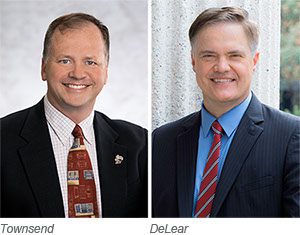
by Dave Townsend and Byron DeLear
Missouri is now in a position to lead on one of the most successful public-private partnerships and economic drivers in recent memory. As one of the early state adopters of the Property Assessed Clean Energy program, also known as “PACE,” the Show Me State has the most successful and diverse PACE programs in the Midwest, creating good-paying jobs and upgrading infrastructure without public spending. Perhaps most noteworthy is the fact that PACE programs in Missouri are available for both commercial property owners and homeowners — one of only three states in the U.S. to do so.
What makes PACE innovative, is that it provides
100% financing for critical infrastructure
upgrades without negatively impacting public
budgets. It also makes it easier for home and
building owners to make smart investments that
reduce their energy use, cut pollution, save on
utility bills and treat the idea of renewable
energy as an aspect of good asset
management, not merely a “lifestyle choice.”
Through Missouri PACE, property improvements such as high efficiency heating and cooling systems, LED lighting upgrades, solar panels, high efficiency doors, windows, and even energy efficient roofing can be financed over longer terms (up to 20 years) with special property assessments. These kinds of improvements are popular with property owners because they typically pay for themselves through savings—and PACE makes it possible for these upgrades to be installed today, rather than tomorrow.
Missouri PACE has proven to be good public policy. Energy technology is always evolving and reaching higher levels of efficiency each year. But where state budgets may be overburdened, PACE programs solve the problem of improving infrastructure by paying for the investment with private capital. In Missouri, we’ve all grown accustomed to seeing these advances in the transportation sector with higher fuel efficiency standards locked in by a combination of market incentives (better gas mileage) and government mandates such as CAFE (Corporate Average Fuel Economy) standards and regulations. However, expanding government mandates concerning energy standards for homes and buildings may not be feasible. Through PACE, property owners benefit by upgrading their properties, lowering their utility bills, and increasing the value of their homes and businesses; while Missouri benefits by increased energy independence, lower stress on the energy grid, and a safer, higher quality of housing and buildings stock. Simply put, PACE allows for the updating and modernization of our private sector infrastructure without increasing government mandates and spending.
It's no doubt that real estate will be positively impacted by the Missouri PACE program and there are many reasons for Missouri real estate professionals to also embrace PACE. The program has already been instrumental in refreshing some of our aging housing stock. In fact, with nearly 40 percent of all owner-occupied homes in the country being built in 1969 or prior, PACE is providing an opportunity for these aging homes to be brought up to current efficiency standards, raising property values, and improving local real estate markets.
Property improvements that are financed through the program are required to pay for themselves through energy savings and other economic benefits. This allows for homeowners to enjoy upgrades now while payments are offset by savings. And, to ensure the viability of the program, only responsible homeowners who are up to date on property taxes, have no bankruptcies, and no involuntary liens of more than $1000 are eligible to participate in the program. Real estate professionals benefit from being able to assist sellers to obtain higher resale value for homeowners during transactions. This in turn benefits the sellers, the agents through higher commissions, and the purchasers. Educated and energy-conscious consumers of the future will seek out properties that offer the benefits of these improvements.
Missouri's PACE programs are also putting people to work. It's part of a statewide effort that has seen an over 5 percent clean energy job growth—more than three times that of Missouri's overall economy. With $50 million in direct economic activity, more than 750 good-paying Missouri jobs have been made possible by our state's PACE programs—all without using a single tax payer dollar for project financing.
Through job growth, improved infrastructure and home improvement projects, PACE has proven to be an innovative tool in addressing the critical needs of Missourians. Ultimately, it's imperative we continue to adopt effective programs like PACE if we want to stay competitive, innovative, and keep our economy moving forward.
Dave Townsend is with RE/MAX Results and has over 28-years of real estate experience in Missouri and is active with the St. Louis Association of Realtors and Missouri Realtors.
Byron DeLear is Central Regional Executive – Midwest for Ygrene Energy Fund, a leading national PACE provider. DeLear has designed and administers PACE programs in Missouri and Arkansas.
For more info: There are several active PACE programs in Missouri serving different areas including Set the PACE St. Louis for City of St. Louis property owners; Missouri Energy Savings Program for St. Louis County; and two programs covering areas around the state: Show Me PACE and the Missouri Clean Energy District.
News Release
November 17, 2017
Ygrene Receives Community Partner Award from MOKAN Construction Assistance Center
Ygrene recognized for work with St. Louis' minority business community at the 43rd Annual MOKAN Awards Dinner on November 17, 2017.
St. Louis (BUSINESS WIRE)—Ygrene Energy Fund, a national leader in resiliency and clean energy financing, today received the Community Partner Award from MOKAN Construction Contractors Assistance Center, a leader in advancing opportunities for minority and female businesses within the St. Louis Metropolitan area. The award highlights Ygrene’s efforts to connect minority businesses with access to stronger energy-contract job opportunities, particularly its community-based partnership with MOKAN and the city’s clean-energy financing program, Set the PACE St. Louis.
"Set the PACE St. Louis has demonstrated tremendous support for minority and women contractors through its inclusion scholarship initiative," said Yaphett El-Amin, Executive Director of MOKAN. "This partnership and expanded inclusion initiative will provide an opportunity for minority and women-owned businesses and workers to gain access to financing for energy efficiency projects, expanding access to these services for low income communities."
 The Community Partner Award was awarded at the 43rd Annual MOKAN Awards Dinner, an event designed to bring together public, private and non-profit industry stakeholders and expose minority business owners and workers to the region’s top industries, with a primary focus on expanding capacity building and workforce opportunities.
“We’re honored to receive this award from MOKAN because it reflects Ygrene’s work and company values,” said Byron DeLear, Managing Director & Central Regional Executive for Ygrene. “Specifically, Set the PACE St. Louis has been an effective platform to help minority contractors succeed in the home performance and clean-energy environment. We look forward to seeing Ygrene, and the role of PACE, grow within the region through the partnerships we’ve established.”
Ygrene recently acquired Missouri-based Energy Equity Funding (EEF), the property assessed clean energy administrator, which oversees Set the PACE St. Louis and the Missouri Energy Savings Program for St. Louis County. The former launched in 2013 with the goal of offering innovative financing solutions for City of St. Louis property owners to perform energy efficiency and renewable energy property upgrades. The program has completed some of the largest commercial Property Assessed Clean Energy (PACE) projects in the nation, including comprehensive energy efficiency upgrades on historic buildings and redevelopment of underutilized properties and vacant buildings to help revitalize the region’s urban core. St. Louis County’s Missouri Energy Savings Program, or “MO-ESP,” launched earlier this year.
Exceeding $4 billion in project funding nationally, PACE financing has grown in its appeal due to a track record of attracting private capital (as opposed to taxpayer funds) to power one of the most successful public policy and local economic development initiatives in the United States.
About Ygrene Energy Fund
Ygrene Energy Fund is a national leader in residential and commercial clean energy financing. Founded in 2010, Ygrene’s award-winning, privately funded Property Assessed Clean Energy (PACE) program is revolutionizing the home improvement industry, making it easier for property owners to invest in their futures and a healthier environment. Ygrene is delivering greater choice for home and business owners by providing accessible and affordable financing for energy efficiency, renewables, water conservation, storm protection and seismic upgrades. Recognized as one of the fastest growing asset classes in the country, PACE has proven to be a successful tool for supporting public policy initiatives, all without the use of public tax dollars or credits. To date, Ygrene has provided over $1 billion of private capital to more than 400 local communities, creating thousands of jobs and investing millions into local economies across the U.S. Learn more at ygreneworks.com.
About MOKAN
Since 1974, MOKAN has been a leader in advancing opportunities of growth for minority and female businesses within the St. Louis Metropolitan area. MOKAN in 2010, launched the MOKAN Institute through a collaborative partnership with St. Louis Community College. In 2012 MOKAN expanded its facilities to 4666 Natural Bridge which is now known as the MOKAN Business and Educational Center. Through this expansion MOKAN has continued to not only service the needs of the minority construction community but has expanded its services to other minority businesses and workers.
Media Contacts:
Ygrene Energy Fund
Joaquin McPeek, 916.599.4166
[email protected]
Sloane Company
Amanda Coyle, 212.446.1867
[email protected]

Public News Service
October 3, 2016
Missouri is Most-Improved State for
Missouri's PACE programs are getting some credit for the state's progress in
moving toward green energy and power savings.
ST. LOUIS – Missouri has made some big strides in saving electricity. The latest report card from the American Council for an Energy-Efficient Economy (ACEEE) ranks Missouri 32nd among the states, up 12 spots from 2015.
Kristy Manning, director of the Missouri Department of Energy, said as part of the Obama Administration's Clean Power Plan, states are encouraged to select energy efficiency as a way to meet goals set by the federal government.
"With just some thoughtful planning, it's not hard for a state to start making some real progress and advancement in these areas," said Manning. "But it does require some strategic planning and thoughtfulness in how to approach it, and how to do it most meaningfully."
Missouri was praised for its Property Assessed Clean Energy Program (PACE). It allows property owners to apply for financing to make energy-saving upgrades, like adding insulation, storm windows and doors, LED lighting and upgrades to heating and cooling systems. The money is paid back over 20 years.
Current legislative candidate Byron DeLear administers "Set the Pace St. Louis" and started the St. Louis County PACE Program. He explained that PACE works by keeping the monthly payments low enough that they're offset by money saved on the retrofits.
DeLear cited the Missouri Athletic Club as an example—which, last year, was the second-largest PACE project in the nation.
"The Missouri Athletic Club was the first building west of the Mississippi to have air conditioning; it still had the original air handlers in it," said DeLear. "On the first year after the energy-efficiency measures were performed on the property, the Missouri Athletic Club is saving $205,000."
Carolyn Amparan, chair of the Sierra Club's Osage Chapter based in Columbia, Mo., noted that her city has made improvements to save energy in business and residential construction. She thinks that needs to happen statewide.
"Getting more municipalities and counties to adopt the codes would be an excellent step forward," said Amparan. "And then, the utilities in the state could do more as well. Some of them are really exceptional, like ours here in Columbia, but others have not really invested in energy-efficiency programs as much as they could."
The report card notes Missouri is the most-improved state in the nation this year in terms of energy efficiency.
St. Louis/Southern Illinois Labor Tribune
By Byron DeLear and Tim Murray
May 11, 2016
Missouri Leads Midwest in Clean-Energy Job Growth; Expansion Set to Continue
One brilliant economic success story for Missouri is the fact that we are currently enjoying the highest clean-energy job growth in the Midwest. According to a recent report based on U.S. Bureau of Labor statistics, 52,000 Missourians work in clean-energy with 13,000 workers added in the past year alone. The growth rate of 8.3% is the highest among all 12 states in the region. Good news is, due to the launch of new clean-energy programs and the expansion of existing ones in our state, job opportunities in this sector will continue to increase at an accelerated pace.
DRIVER FOR GROWTH
“Bottom line is folks are saving money on their energy bills and this is the real driver of growth,” said Tom Appelbaum of Energy Equity Funding, LLC. Energy Equity Funding administers several clean-energy programs in the Midwest including “Set the PACE St. Louis” which provides 100% up-front financing for energy improvements for property owners. “The financing under the program is paid back as a voluntary special assessment and is available at longer terms than traditional loans,” added Appelbaum. “For participating property owners, this creates a net-positive cash-flow due to lower utility costs and other savings.”
Energy-efficiency is the largest portion of Missouri's clean-energy workforce at nearly three-quarters of all jobs in the state. 45% of the workforce is located in the metropolitan St. Louis region.
PROJECT SUCCESS
One of the most successful projects in the nation for 2015 was the $2.4mm comprehensive energy-retrofit on the Missouri Athletic Club (MAC) Downtown Clubhouse. The iconic city landmark was the first building to have air conditioning west of Mississippi, and post-upgrade, will save more than $200,000 its first year. By year twenty, the MAC's new facilities will be generating $362,000 a year in savings.
“This piece makes great sense for us,” stated MAC General Manager Wally Smith. “These systems will be working for 20 or 30 years down the road and set the club up for the future—and without any out-of-pocket costs for us? It’s really a no-brainer.”
QUALITY UNION WORK
On the MAC project, the International Brotherhood of Electrical Workers (IBEW) Local 1 teamed-up with general contractor Trane and worked 800 man hours supplied by four electrical contractors: Kaemmerlen Electric, Aschinger Electric, Electric Mechanics, and Temperature Control Solutions.
“We absolutely recognize the environmental, economic, and social value of clean-energy and are excited to work on touchstone projects like the MAC,” said Doug Martin of the National Electrical Contractors Association. “Our affiliated contractors provided the electrical portion for the energy efficient upgrades to the Heating and Air Conditioning System along with the lighting retrofit. Savings are generated in a number of ways including utilizing programmable set points on thermostats, providing ‘demand’ lighting, and load shedding.
GOOD-PAYING AMERICAN JOBS
Clean-energy property retrofits create good-paying, American jobs that can't be outsourced. Occupations such as pipefitters, electricians, insulators, and laborers all play a role in completing these projects. Additionally, 90% of the products associated with energy-efficiency, such as insulation, caulking, and weather stripping, are made in the U.S.A.
The IBEW, the National Joint Apprenticeship and Training Committee, and the National Electrical Contractors Association have developed some of the most advanced green-jobs training programs and facilities in the United States, and have invested more than $140 million in renewable energy training.
Since 1941, IBEW training centers have been educating electricians on all modern electrical needs. They possess state-of-the-art green training equipment, including solar arrays, wind turbines, and programmable logic controllers.
The St. Louis Building and Construction Trades, of which the IBEW Local 1 is a member, has recently signed a St. Louis Clean-Energy Workforce Agreement for the City and County which is unique in the United States.
“We will coordinate our exclusive BUD (Building Union Diversity) program with the City and County’s PACE programs to include specific educational materials and training associated with developing careers in clean-energy,” said Jeff Aboussie, Secretary for the St. Louis Building and Construction Trades.
“The BUD program is only one way in which Set the PACE St. Louis and the County’s new PACE program will be focusing on community inclusion—providing opportunities for minorities and women as well as existing journeymen to become apprentices with participating unions to learn the skills allowing them to employable for the rest of their lives.”
STARK CONTRAST
Community workforce agreements are a fundamental part of revitalization and renewal efforts for our region—and when coupled with the transformative movement occurring in clean-energy—revenue neutral initiatives like PACE-financing can actually begin to address larger issues such as climate pollution while also advancing economic interests.
In the upcoming national contest for the Presidency, climate change will undoubtedly play a critical role for voters as the likely Democratic and Republican nominees couldn't offer a more stark contrast. America, as the prime industrial mover, has a moral responsibility to lead on the shift toward clean-energy; and, in an ironic twist, Missouri, in terms of growth, is actually at the head of the pack.
Byron DeLear is a program administrator for Set the PACE St. Louis and a candidate for Missouri State Representative. Tim Murray is a Business Representative for the IBEW in the St. Louis jurisdiction and an officer on the IBEW Local 1 Executive Board.






Latest News